 Salta-fila disponibile
 Leggere i rilievi di Borobudur
La base nascosta, le quattro gallerie e come una passeggiata in senso orario di 5 chilometri sia stata progettata per essere letta come un libro.
La maggior parte dei visitatori sale a Borobudur per il panorama dalla cima, e il panorama lo merita. Ma il monumento non è stato costruito per essere ammirato dall'alto; è stato costruito per essere attraversato e letto. Le gallerie che avvolgono a spirale le terrazze quadrate ospitano circa 2.670 bassorilievi — circa 1.460 pannelli narrativi e circa 1.212 decorativi — disposti in una sequenza deliberata che un pellegrino che cammina in senso orario incontrerebbe in ordine, livello per livello, lungo un percorso di oltre cinque chilometri. Sapere cosa stai guardando trasforma una salita in una lettura. Questa guida spiega cosa è scolpito dove, perché la serie più bassa è quasi interamente nascosta alla vista e come orientarsi nelle gallerie nel tempo di una singola sessione.
Perché i rilievi sono disposti in questo modo
Borobudur è costruito su tre livelli: una base piramidale, cinque terrazze quadrate concentriche che formano il corpo, poi tre piattaforme circolari che reggono uno stupa monumentale al vertice. L'UNESCO descrive questa divisione verticale di base, corpo e sovrastruttura come perfettamente conforme alla concezione dell'universo nella cosmologia buddhista — le tre sfere sovrapposte di kamadhatu, rupadhatu e arupadhatu. La base rappresenta la sfera dei desideri, dove restiamo legati a ciò che vogliamo; le terrazze quadrate la sfera delle forme, dove il desiderio è abbandonato ma nome e forma permangono; le piattaforme circolari e lo stupa coronale la sfera dell'assenza di forme, dove nulla di tutto ciò rimane.
L'intaglio segue esattamente questo schema. La sfera del desiderio è illustrata in basso, con le immagini più letterali e terrene del monumento. La sfera delle forme occupa le gallerie chiuse, dove la narrazione si svolge all'altezza degli occhi tra due pareti scolpite. La sfera dell'assenza di forme, in cima, è quasi spoglia: niente gallerie, niente storie, solo le terrazze aperte, gli stupa traforati e il cielo. La decorazione non si dirada perché agli artefici mancò il tempo. Si dirada perché è questo il messaggio che l'edificio vuole comunicare.
Le pareti e le balaustre insieme portano bassorilievi su una superficie di circa 2.520 metri quadrati. La direzione di percorrenza prevista è in senso orario, a partire dalla scalinata orientale — la pratica della pradakshina, mantenendo il monumento alla propria destra — e un pellegrino che completa ogni livello in ordine percorre oltre cinque chilometri prima di raggiungere la vetta. Gli orari delle sessioni moderne non consentono il giro completo a ritmo di lettura, ed è proprio per questo che conviene sapere in anticipo davanti a quali pannelli desideri fermarti di più.
La prima galleria: la vita del Buddha e i racconti delle vite precedenti
La prima galleria è dove la maggior parte dei visitatori inizia a leggere, e porta due programmi distinti sulle sue due pareti. La parete principale contiene 120 pannelli del Lalitavistara — la vita di Gautama Buddha, dalla decisione di nascere, attraverso gli anni di palazzo, la partenza, gli anni di austerità, l'illuminazione e il primo sermone. Si legge da sinistra a destra mentre si cammina in senso orario, ed è la sequenza più immediatamente leggibile del monumento perché la storia è familiare anche ai visitatori senza alcun background buddista.
Sotto e accanto corrono le serie Jataka e Avadana: racconti delle vite precedenti del Buddha e delle azioni meritorie di altri, 120 pannelli sulla parete principale con altri 372 e 128 lungo le balaustre. Questi sono i pannelli del narratore — animali che si comportano meglio dei re, sacrifici di sé resi con una quasi allegra naturalezza, navi ed elefanti e foreste. Se avete bambini con voi, è questo il livello in cui smettono di annoiarsi.
Una nota pratica sull'osservazione: le gallerie sono strette, e l'intaglio è progettato per essere letto a passo di camminata da circa un metro di distanza. Farsi indietro per fotografare un'intera parete la appiattisce e perde la profondità che gli scultori hanno cercato. I rilievi inoltre non vanno toccati — gli oli delle mani e l'abrasione sono esattamente ciò che una superficie di andesite millenaria non può sopportare in quantità — quindi leggete con gli occhi e lasciate che sia la guida a indicare, piuttosto che indicare voi stessi.
Le gallerie superiori: il pellegrinaggio di Sudhana
Dalla seconda galleria in su il monumento si dedica quasi interamente a un unico testo: il Gandavyuha, la storia del giovane Sudhana e del suo viaggio attraverso una successione di maestri in cerca di comprensione. La sequenza si estende su 128 pannelli sulla parete della seconda galleria, 88 sulla terza e 84 sulla quarta, portando il lettore costantemente più in alto mentre la storia avanza. È la narrazione singola più lunga dell'edificio e la meno familiare alla maggior parte dei visitatori.
È anche, deliberatamente, la meno movimentata. Dove la prima galleria offre re, elefanti e rinunce drammatiche, il Gandavyuha offre incontro dopo incontro, maestro dopo maestro, ogni conversazione che fa avanzare Sudhana un po' più in là. La ripetizione è il punto: il pellegrinaggio è lungo, le lezioni si accumulano, e il lettore che sale il monumento compie lo stesso viaggio in pietra che Sudhana compie nel testo.
Alla quarta galleria le pareti stanno finendo la storia più o meno allo stesso ritmo con cui il visitatore sta finendo il fiato, e poi le gallerie semplicemente terminano. Si esce sulle terrazze circolari e l'intaglio si ferma. Dopo più di un chilometro di narrazione densa, il vuoto improvviso delle piattaforme superiori è una delle transizioni architettoniche più efficaci di tutta l'Asia, ed è in gran parte sprecato per chiunque abbia salito le scale senza vedere le pareti.
I Buddha: 504 statue e come differiscono
Il monumento custodiva originariamente 504 statue di Buddha. La maggior parte è collocata in nicchie lungo le balaustre delle terrazze quadrate, in file che salgono seguendo l'ascesa dell'edificio; le restanti 72 si trovano all'interno delle stupa a campana traforate che circondano le tre piattaforme circolari sulla sommità, ciascuna visibile a frammenti attraverso la pietra traforata. Non tutte sono giunte intatte — nel corso dei secoli sono state asportate delle teste e alcune nicchie oggi sono vuote — ma la disposizione resta comunque leggibile dal suolo.
Le statue non sono identiche, e le differenze sono il dettaglio più gratificante del monumento per una seconda visita. La posizione delle mani varia a seconda del lato dell'edificio a cui la statua è rivolta, ogni mudra con il proprio significato, così un Buddha sul lato orientale tiene le mani in modo diverso da uno sul lato occidentale. Percorrere l'intero giro di una singola terrazza osservando il gesto cambiare è un piacere più silenzioso della vista dalla sommità e richiede circa dieci minuti.
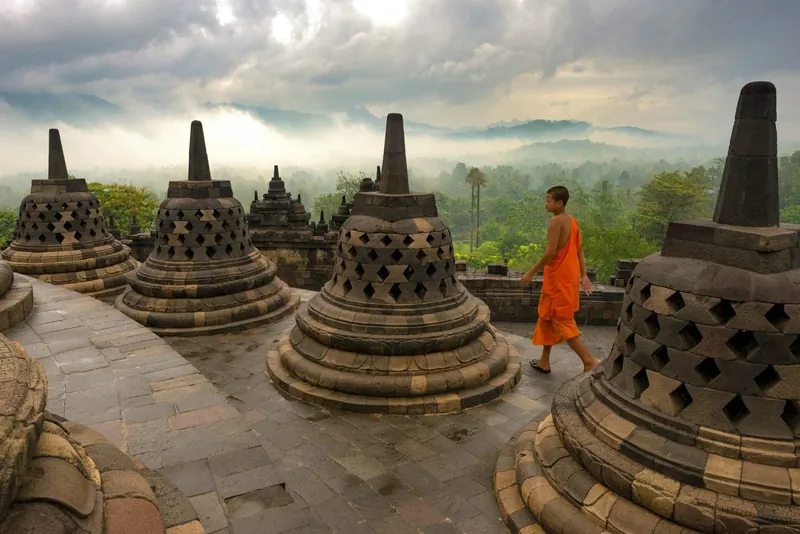
Gli stupa in cima sono dove l'etichetta conta di più. C'è una tradizione persistente tra i visitatori di infilare la mano attraverso il traforo per toccare il Buddha all'interno per portafortuna, ed è una cosa che vi chiediamo di non fare. Questo è un luogo di culto attivo oltre che un sito archeologico — i buddhisti in Indonesia si riuniscono qui ogni anno a Vesak, durante la luna piena di maggio o giugno, e circumambulano il monumento in senso orario come i pellegrini fanno da secoli. Guardate attraverso la pietra, fotografatela se volete, e tenete le mani a posto.
Leggere l'intaglio senza salire
L'accesso alle terrazze avviene tramite sessioni a orario fisso e a numero limitato, e non tutti i visitatori ne desiderano una — alcuni non riescono a fare le scale, alcuni viaggiano con bambini piccoli, alcuni semplicemente arrivano in un giorno in cui le sessioni che volevano sono esaurite. Nulla di tutto ciò ti esclude dai rilievi. L'ingresso al parco ti dà accesso all'intero parco archeologico, alla passeggiata attorno alla base del monumento e ai due musei, e una visita meditata a livello del suolo è una migliore introduzione all'intaglio di una salita frettolosa.
Il Museo Karmawibhangga è la ragione. Conserva la documentazione del piede sepolto — i pannelli che nessuno può vedere in situ — e vi permette di guardarli al vostro ritmo, senza il timer della sessione che scorre e senza l'affollamento di una galleria stretta. Nelle vicinanze, il Museo Samudraraksa prende una direzione completamente diversa, costruito attorno alle navi incise sulle pareti del monumento e al mondo marittimo che portò il buddhismo a Giava in primo luogo. Entrambi sono inclusi nel biglietto d'ingresso al parco.
Dai prati, il monumento si legge anche come un oggetto unico in un modo che non accade mai dall'interno delle gallerie: le terrazze quadrate a gradoni, le tre piattaforme circolari sopra di esse, lo stupa coronante, l'intero piano del mandala leggibile in un colpo d'occhio. Camminate lungo il perimetro in senso orario, fermatevi all'angolo sud-est dove il piede nascosto è esposto, poi entrate nei musei. È una visita di due ore che vi lascia comprendere l'edificio piuttosto che semplicemente esserci stati sopra.
Domande frequenti
Si possono davvero vedere i pannelli Karmawibhangga nascosti?
Solo una sezione. La pietra di rivestimento che copre il piede del monumento è stata lasciata aperta all'angolo sud-est, dove si può vedere l'intaglio originale in situ. Il resto della serie di circa 160 pannelli è sigillato dietro il contrafforte ed è visibile solo come fotografie documentali, esposte nel Museo Karmawibhangga all'interno del parco, che il biglietto d'ingresso include.
Quanti pannelli in rilievo ha Borobudur in totale?
Circa 2.670 bassorilievi individuali, di cui circa 1.460 sono pannelli narrativi e circa 1.212 decorativi. I pannelli narrativi sono distribuiti tra il piede nascosto e le quattro gallerie: il Karmawibhangga alla base, la vita del Buddha Lalitavistara e i racconti Jataka e Avadana nella prima galleria, e il pellegrinaggio Gandavyuha di Sudhana attraverso la seconda, la terza e la quarta.
In quale direzione devo camminare attorno alle gallerie?
In senso orario, tenendo il monumento alla propria destra, partendo dalla scalinata orientale. Questa è la direzione della pradakshina, la circumambulazione attorno alla quale l'edificio è stato progettato, ed è anche la direzione in cui si leggono i pannelli narrativi. Camminare in senso antiorario significa incontrare ogni storia al contrario. Una lettura completa di ogni livello copre più di cinque chilometri, più di quanto una singola sessione consenta.
Posso toccare il Buddha all'interno degli stupa?
La preghiamo di non farlo. La tradizione di infilare la mano attraverso la pietra traforata per portafortuna è diffusa ma dannosa, sia per la scultura sia per la struttura dello stupa, e Borobudur rimane un luogo vivo di culto buddista oltre che un monumento patrimonio dell'umanità. Lo stesso vale per i pannelli in rilievo: niente tocchi, niente appoggi, niente arrampicate sulle pareti. Le guide vi chiederanno lo stesso, con cortesia ma fermezza.
Quanta parte dell'intaglio posso realisticamente vedere in una sola visita?
Una singola sessione strutturata di novanta minuti vi dà il tempo per l'angolo nascosto del piede esposto, uno sguardo approfondito a una galleria e le terrazze superiori — non l'intero circuito. Suggeriamo di scegliere in anticipo: la prima galleria se volete la vita del Buddha e i pannelli narrativi, le gallerie superiori se volete il pellegrinaggio di Sudhana. I musei nel parco completano il resto senza limiti di tempo.
È necessaria una guida per comprendere i rilievi?
Una guida accompagna ogni salita della struttura del tempio, e sui rilievi fa davvero la differenza — i pannelli non hanno didascalie e la sequenza non è evidente per chi visita per la prima volta. Se avete un interesse particolare, ditelo all'inizio della sessione piuttosto che alla fine. Le guide dispongono di molto più materiale di quanto ne usi una visita standard e saranno liete di approfondire se richiesto in anticipo.