 Ohne Anstehen buchbar
 Beste Reisezeit für Borobudur
Monat für Monat
Die besten Monate insgesamt sind Mai, Juni und September – trocken, klar, überschaubare Besucherzahlen. Juli und August haben perfektes Wetter, sind aber voll und teuer. November bis März ist Regenzeit, doch die Niederschläge sind weniger beständig, als viele Reiseblogs suggerieren, und die Besucherzahlen sind am niedrigsten. Meiden Sie die Woche um Eid al-Fitr (März oder April, je nach Jahr), das Wochenende des indonesischen Unabhängigkeitstags (17. August), die Zeit von Weihnachten bis Neujahr und das Wochenende des chinesischen Neujahrs, wenn Sie einen ruhigen Besuch wünschen. Die Temperatur in Borobudur ist das ganze Jahr über im Wesentlichen gleich: 28–32 °C tagsüber, 18–22 °C in der Morgendämmerung. Wählen Sie Ihren Monat nach Besucherandrang und Festen, nicht nach dem Wetter – Zentraljava ist zuverlässig warm, egal wann Sie reisen.
Trockenzeit – April bis Oktober
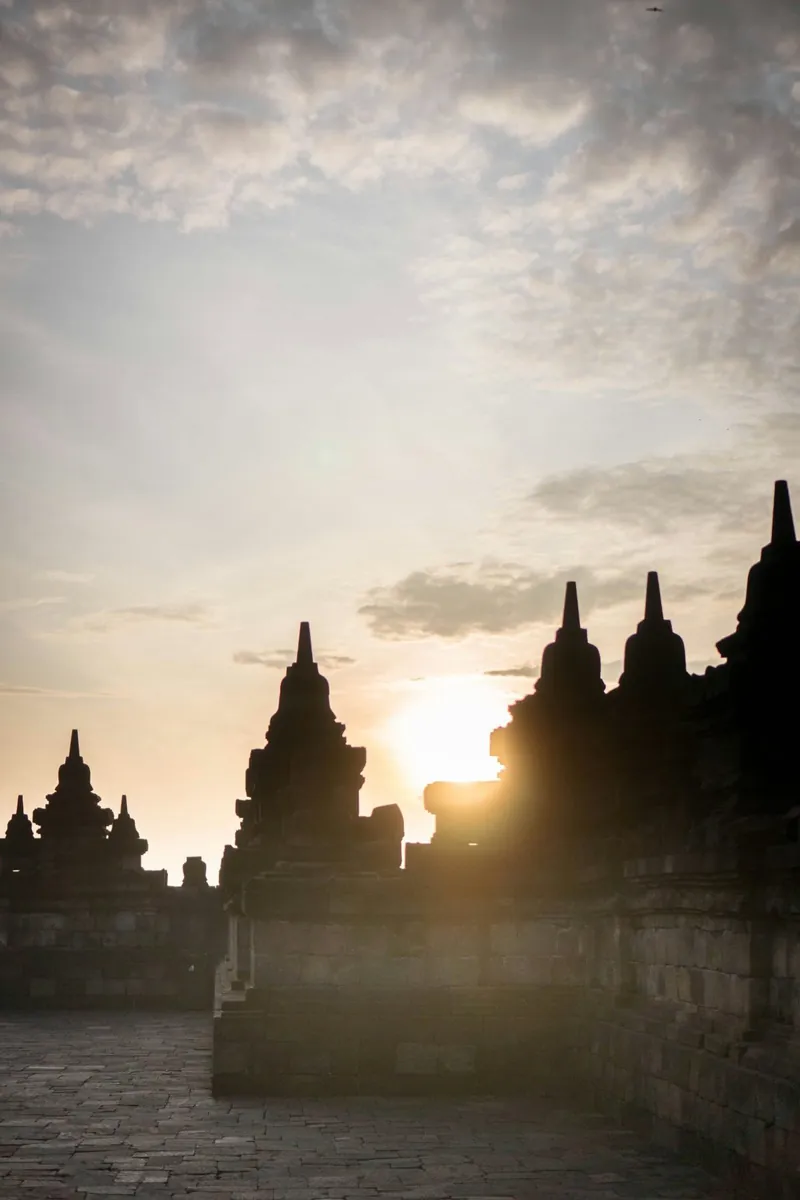
Die Trockenzeit in Borobudur dauert von Ende April bis Anfang Oktober. Der Himmel ist zuverlässig klar, die Morgen sind kühl, und die Reisfelder rund um den Tempel leuchten in den ersten Monaten hellgrün und zur Erntezeit golden. Sonnenaufgangsbesuche haben in diesen Monaten die größte Chance auf einen unverstellten Blick auf das Kedu-Tal – weshalb die meisten Fotografen ihre Reise in dieses Zeitfenster legen.
Innerhalb der Trockenzeit empfehlen wir zuerst Mai, Juni und September. Der April ist zwar technisch gesehen der Beginn, kann aber noch Nachzügler-Regen bringen. Juli und August bieten das zuverlässigste Wetter, fallen aber mit den europäischen Sommerferien und den indonesischen Schulferien zusammen – rechnen Sie mit höheren Preisen, volleren Zeitfenstern und Tickets, die zwei bis vier Wochen im Voraus ausverkauft sind. Der September ist der Geheimtipp: immer noch trocken, immer noch kühl am Morgen, aber die Besucherzahlen nehmen bereits ab.
Regenzeit – November bis März
Die Regenzeit ist feuchter, nicht verregnet. Regen in Borobudur fällt typischerweise in heftigen Schüben am späten Nachmittag, oft nach einem klaren Morgen. Sonnenaufgangs-Sessions finden weiterhin statt, und die frühen Morgenstunden sind selbst in den regenreichsten Monaten oft trocken. Der Nachteil: Vor der Morgendämmerung ist die Bewölkung häufiger, sodass das Postkarten-Sonnenaufgangsfoto weniger zuverlässig ist.
Was Sie in der Regenzeit gewinnen, ist Platz. Die Besucherzahlen sinken ab November drastisch (abgesehen vom Weihnachts-Neujahrs-Peak), Tickets sind kurzfristig leichter zu bekommen, und die umliegende Landschaft ist am üppigsten. Wenn Sie beim Sonnenaufgangsfoto flexibel sind, ist die Regenzeit eine wirklich gute Reisezeit – und die einzige Zeit, in der Sie bequem ein paar Tage im Voraus buchen können.
Zu meidende Daten
Die Woche um Eid al-Fitr (Lebaran) ist die mit Abstand geschäftigste Woche des indonesischen Jahres. Die Daten verschieben sich jedes Jahr nach dem islamischen Kalender – 2026 fällt sie Ende März. Der Inlandstourismus erreicht seinen Höhepunkt, jedes Hotel im Umkreis von 20 km um den Tempel ist restlos ausgebucht, und der Tempel selbst füllt sich mit indonesischen Besuchern. Meiden Sie diese Woche, wenn Sie können.
Der indonesische Unabhängigkeitstag (17. August) bringt ein langes Wochenende mit Inlandsreisen. Weihnachten bis Neujahr ist der internationale Höhepunkt. Das Wochenende des chinesischen Neujahrs (typischerweise Ende Januar oder Februar) bringt einen Ansturm regionaler Besucher. Keiner dieser Termine macht den Besuch unmöglich – sie machen ihn nur voller und teurer, mit längeren Wartezeiten und volleren Zeitfenstern.
Was wir unseren Gästen raten
Wenn Sie bei Ihren Reisedaten flexibel sind, planen Sie die ersten drei Maiwochen, die ersten beiden Juni Wochen oder eine beliebige Septemberwoche ein. In diesen Zeiträumen herrscht Trockenzeit ohne die Hochsaison-Menschenmassen. Buchen Sie Ihre Tickets zwei bis drei Wochen im Voraus, um Ihren Wunschtermin zu sichern – besonders den Sonnenaufgang.
Sind Ihre Daten festgelegt und fallen in die Hochsaison, buchen Sie, sobald Sie sie kennen. Das Limit von 100 Gästen pro Tag für den Sonnenaufgang ist strikt, und im Juli und August sind die Zeitfenster früher ausverkauft, als man denkt. Fallen Ihre festen Daten in die Regenzeit, bevorzugen Sie den Sonnenuntergang – die Nachmittagshimmel in Zentraljava sind in diesen Monaten meist klarer als die vor der Dämmerung.
Dinge, die Ihnen niemand sagt
Vesak (Waisak) im Mai oder Juni ist der buddhistische Feiertag, an dem Borobudur zu einer aktiven Pilgerstätte wird. Der Tempel ist wie gewohnt für Besucher mit Ticket geöffnet, doch die Atmosphäre ist einzigartig – Mönche in Roben, Kerzenprozessionen und eine stille Ehrfurcht, die den Ort verwandelt. Prüfen Sie die Daten für Ihr Reisejahr.
Die Erntezeit um Juli und August färbt die Reisfelder rund um den Tempel tiefgolden. Diese Farbe verbinden die meisten mit Borobudur-Fotografien, und sie ist einer der visuellen Gründe, warum dieser Monat so viele Fotografen anzieht. Im Oktober sind die Felder neu bepflanzt und wieder leuchtend grün – ebenso fotogen, aber anders.
Die Temperatur täuscht. In der Trockenzeit ist es auf dem Tempelgelände heißer (mehr direkte Sonne, keine Wolkendecke), aber kühler im Morgengrauen (klarere Himmel strahlen nachts Wärme ab). In der Regenzeit ist es umgekehrt – milder am Tag, wärmer vor der Dämmerung. Packen Sie für den Sonnenaufgang in der Trockenzeit eine wärmende Schicht ein; in der Regenzeit können Sie darauf verzichten.