 Coupe-file disponible
 Meilleure période pour visiter Borobudur
Mois par mois
Les meilleurs mois dans l'ensemble sont mai, juin et septembre — secs, dégagés, affluence maîtrisée. Juillet et août offrent une météo parfaite mais sont bondés et chers. De novembre à mars, c'est la saison humide, mais la pluie est moins constante que ne le suggèrent la plupart des blogs de voyage, et l'affluence est au plus bas. Évitez la semaine de l'Aïd el-Fitr (mars ou avril selon l'année), le week-end de la fête de l'Indépendance indonésienne (17 août), la période de Noël au Nouvel An, et le week-end du Nouvel An chinois si vous souhaitez une visite paisible. La température à Borobudur est pratiquement la même toute l'année : 28–32 °C le jour, 18–22 °C à l'aube. Choisissez votre mois en fonction de l'affluence et des festivals, pas de la météo — le Java central est toujours agréablement chaud, quelle que soit la période.
La saison sèche — d'avril à octobre
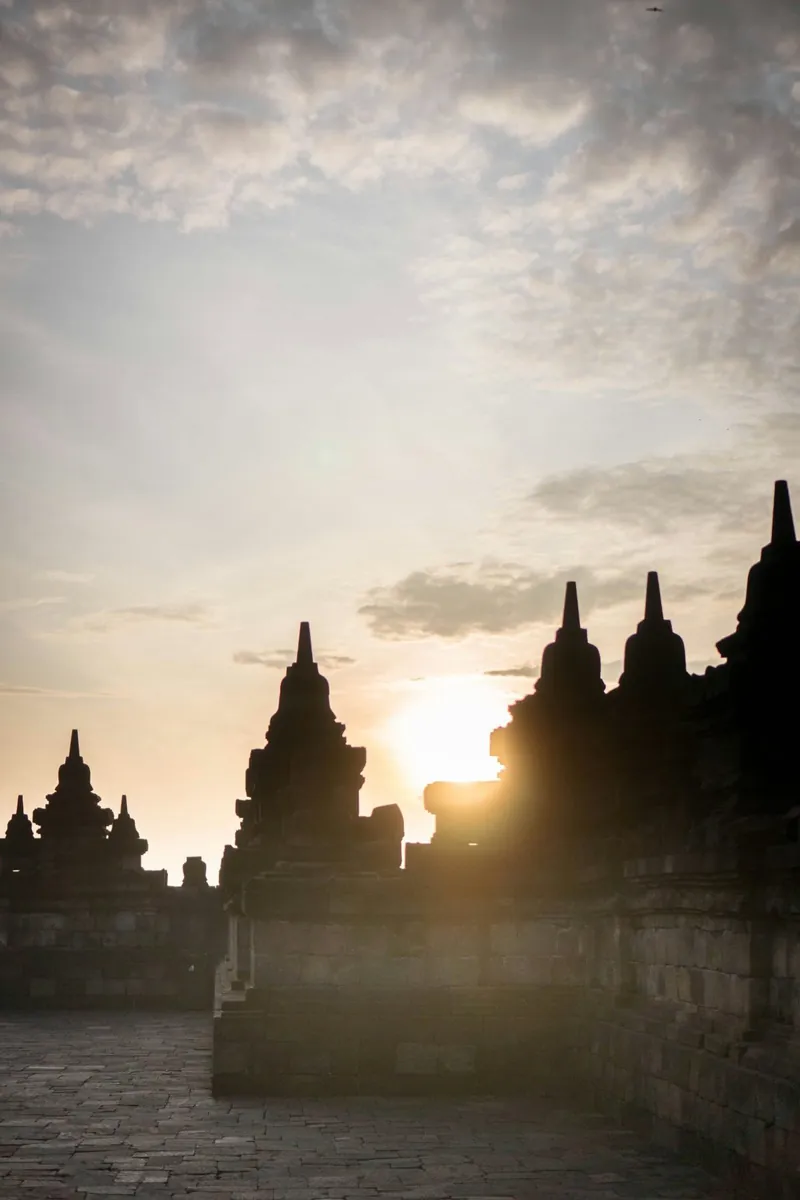
La saison sèche à Borobudur s'étend de fin avril à début octobre. Le ciel est régulièrement dégagé, les matinées sont fraîches, et les rizières autour du temple sont d'un vert éclatant au début de la saison, puis dorées à la moisson. Les visites au lever du soleil offrent la meilleure chance d'une vue dégagée sur la vallée de Kedu durant ces mois, ce qui explique pourquoi la plupart des photographes planifient leur voyage pour cette période.
Au sein de la saison sèche, mai, juin et septembre sont les mois que nous recommandons en premier. Avril marque techniquement le début mais peut encore apporter des pluies de fin de saison. Juillet et août offrent la météo la plus fiable mais coïncident avec les vacances d'été européennes et les vacances scolaires indonésiennes — attendez-vous à des prix plus élevés, des créneaux plus chargés et des billets qui s'épuisent deux à quatre semaines à l'avance. Septembre est le choix discret : encore sec, encore frais à l'aube, mais avec une affluence déjà en baisse.
La saison humide — de novembre à mars
La saison humide est plus arrosée, pas lessivée. La pluie à Borobudur tombe généralement en fortes averses en fin d'après-midi, souvent après une matinée dégagée. Les séances au lever du soleil ont toujours lieu, et les premières heures du matin sont souvent sèches, même pendant les mois les plus pluvieux. La contrepartie : la couverture nuageuse est plus fréquente avant l'aube, rendant la photo de lever de soleil de carte postale moins fiable.
Ce que vous gagnez en saison humide, c'est de l'espace. L'affluence chute nettement à partir de novembre (hors pic de Noël au Nouvel An), les billets sont plus faciles à obtenir à la dernière minute, et la campagne environnante est à son plus luxuriant. Si vous êtes flexible sur la photo au lever du soleil, la saison humide est vraiment un bon moment pour visiter — et c'est la seule période où vous pouvez réserver confortablement des créneaux quelques jours à l'avance.
Dates à éviter
La semaine de l'Aïd el-Fitr (Lebaran) est la semaine la plus chargée de l'année en Indonésie. Les dates changent chaque année selon le calendrier islamique — en 2026, elle tombe fin mars. Le tourisme intérieur est à son apogée, tous les hôtels dans un rayon de 20 km autour du temple sont complets, et le temple lui-même se remplit de visiteurs indonésiens. Évitez cette semaine si vous le pouvez.
La fête de l'Indépendance indonésienne (17 août) entraîne un long week-end de voyages domestiques. La période de Noël au Nouvel An est le pic international. Le week-end du Nouvel An chinois (généralement fin janvier ou février) amène un afflux de visiteurs régionaux. Aucune de ces dates ne rend la visite impossible — elles la rendent simplement plus fréquentée et plus chère, avec des attentes plus longues et des créneaux plus remplis.
Ce que nous disons à nos clients
Si vos dates de voyage sont flexibles, privilégiez les trois premières semaines de mai, les deux premières semaines de juin ou n'importe quelle semaine de septembre. Ces créneaux vous offrent un temps sec sans l'affluence des hautes saisons. Réservez vos billets deux à trois semaines à l'avance pour garantir votre session préférée — surtout le lever du soleil.
Si vos dates sont fixes et tombent en haute saison, réservez dès que vous les connaissez. Le quota de 100 visiteurs par jour pour le lever du soleil est strict, et en juillet-août, les sessions s'épuisent bien plus tôt qu'on ne l'imagine. Si vos dates sont fixes et tombent en saison des pluies, optez plutôt pour le coucher du soleil — dans le centre de Java, les ciels d'après-midi sont généralement plus dégagés que ceux d'avant l'aube durant ces mois.
Ce que personne ne vous dit
Le Vesak (Waisak) en mai ou juin est le jour saint bouddhiste où Borobudur devient un lieu de pèlerinage actif. Le temple est ouvert aux visiteurs munis de billets comme d'habitude, mais l'atmosphère est unique — moines en robe, processions aux chandelles et une quiétude recueillie qui transforme les lieux. Vérifiez les dates pour l'année de votre voyage.
La saison des récoltes, autour de juillet-août, teinte les rizières autour du temple d'un or profond. C'est la couleur que la plupart des gens associent aux photos de Borobudur, et l'une des raisons visuelles pour lesquelles ce mois attire tant de photographes. En octobre, les rizières sont replantées et d'un vert vif — tout aussi photogéniques, mais différentes.
La température est trompeuse. En saison sèche, il fait plus chaud sur le site du temple (plus de soleil direct, pas de couverture nuageuse) mais plus frais à l'aube (ciel dégagé qui rayonne la chaleur la nuit). En saison des pluies, c'est l'inverse — plus doux le jour, plus chaud avant l'aube. Prévoyez une couche supplémentaire pour le lever du soleil en saison sèche ; vous pouvez l'omettre en saison des pluies.