 Zonder wachtrij beschikbaar
 Beste reistijd voor Borobudur
Maand per maand
De beste maanden zijn mei, juni en september — droog, helder, overzichtelijke drukte. Juli en augustus hebben perfect weer, maar zijn druk en duur. November tot maart is regenseizoen, maar de regen valt minder constant dan veel reisblogs beweren en de drukte is op z’n laagst. Vermijd de week van Eid al-Fitr (maart of april, afhankelijk van het jaar), het weekend van de Indonesische Onafhankelijkheidsdag (17 augustus), Kerst tot Nieuwjaar en het weekend van Chinees Nieuwjaar als u een rustig bezoek wenst. De temperatuur bij Borobudur is het hele jaar door vrijwel gelijk: 28–32°C overdag, 18–22°C bij zonsopgang. Kies uw maand op basis van drukte en festivals, niet het weer — Centraal-Java is betrouwbaar warm, ongeacht wanneer u gaat.
Het droge seizoen — april tot oktober
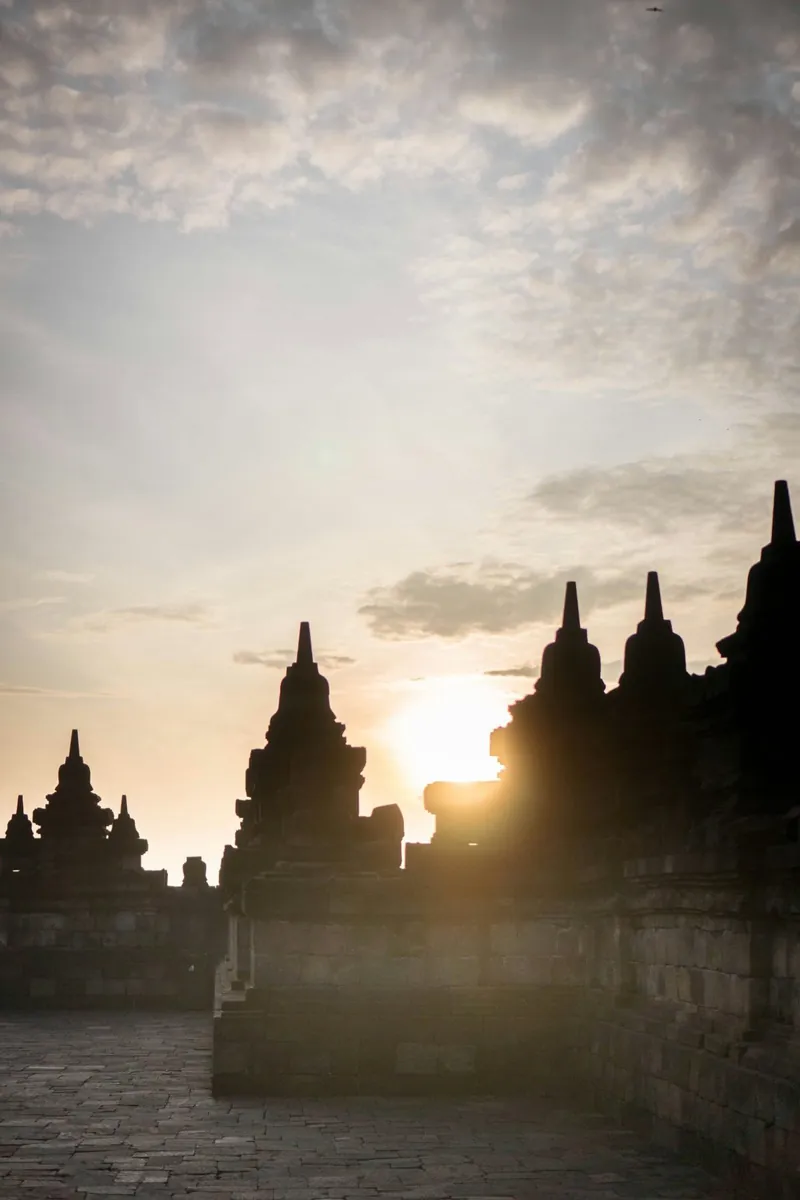
Het droge seizoen bij Borobudur loopt van eind april tot begin oktober. De lucht is betrouwbaar helder, de ochtenden zijn koel en de rijstvelden rond de tempel zijn in de vroege maanden felgroen en goudkleurig tegen de oogst. Zonsopgangbezoeken hebben in deze maanden de grootste kans op een onbelemmerd uitzicht over de Kedu-vallei, daarom plannen de meeste fotografen hun reis in deze periode.
Binnen het droge seizoen bevelen wij mei, juni en september als eerste aan. April is technisch gezien het begin, maar kan nog staartjes van regen brengen. Juli en augustus leveren het meest betrouwbare weer, maar vallen samen met Europese zomervakanties en Indonesische schoolvakanties — verwacht hogere prijzen, drukkere sessies en tickets die twee tot vier weken van tevoren uitverkocht raken. September is de stille tip: nog steeds droog, nog steeds koel bij zonsopgang, maar met al afnemende drukte.
Het regenseizoen — november tot maart
Het regenseizoen is natter, niet uitgespoeld. Regen bij Borobudur valt meestal in zware buien in de late middag, vaak na een heldere ochtend. Zonsopgangsessies gaan nog steeds door en de vroege ochtenduren zijn vaak droog, zelfs in de natste maanden. De afweging: bewolking komt vaker voor voor zonsopgang, dus de ansichtkaart-zonsopgangfoto is minder betrouwbaar.
Wat u wint in het regenseizoen is ruimte. De drukte neemt vanaf november sterk af (behalve de piek van Kerst tot Nieuwjaar), tickets zijn makkelijker op korte termijn te krijgen en het omliggende platteland is op z’n weelderigst. Bent u flexibel met de zonsopgangfoto, dan is het regenseizoen een echt goede tijd om te bezoeken — en het is de enige tijd dat u comfortabel sessies een paar dagen van tevoren kunt boeken.
Data om te vermijden
De week van Eid al-Fitr (Lebaran) is veruit de drukste week van het Indonesische jaar. De data verschuiven elk jaar op de islamitische kalender — in 2026 valt het eind maart. Het binnenlands toerisme piekt, elk hotel binnen 20 km van de tempel is volgeboekt en de tempel zelf vult zich met Indonesische bezoekers. Vermijd deze week als u kunt.
De Indonesische Onafhankelijkheidsdag (17 augustus) brengt een lang weekend van binnenlands reizen. Kerst tot Nieuwjaar is de internationale piek. Het weekend van Chinees Nieuwjaar (meestal eind januari of februari) brengt een golf van regionale bezoekers. Geen van deze maken het bezoek onmogelijk — ze maken het alleen drukker en duurder, met langere wachttijden en vollere sessies.
Wat wij onze gasten vertellen
Als u flexibel bent met uw reisdata, kies dan voor de eerste drie weken van mei, de eerste twee weken van juni of een willekeurige week in september. Deze periodes bieden droogseizoenweer zonder de drukte van het hoogseizoen. Boek uw tickets twee tot drie weken van tevoren om uw gewenste sessie veilig te stellen — vooral zonsopgang.
Zijn uw data vastgesteld en vallen ze in het hoogseizoen? Boek dan zodra u ze weet. Het maximum van 100 gasten per dag voor zonsopgang is strikt, en in juli en augustus raken sessies eerder uitverkocht dan men verwacht. Vallen uw vaste data in het regenseizoen? Kies dan eerder voor zonsondergang dan voor zonsopgang — de middagluchten in Centraal-Java zijn in deze maanden doorgaans helderder dan de lucht vlak voor zonsopgang.
Dingen die niemand u vertelt
Vesak (Waisak) in mei of juni is de boeddhistische heilige dag waarop Borobudur een actieve bedevaartplaats wordt. De tempel is zoals gebruikelijk geopend voor bezoekers met een ticket, maar de sfeer is ongeëvenaard — monniken in gewaden, kaarsprocessies en een stille eerbied die de plek transformeert. Controleer de data voor het jaar waarin u reist.
De oogsttijd rond juli en augustus kleurt de rijstvelden rond de tempel diep goud. Dit is de kleur die de meeste mensen associëren met foto's van Borobudur, en het is een van de visuele redenen dat die maand zoveel fotografen trekt. In oktober zijn de velden opnieuw beplant en felgroen — even fotogeniek, maar anders.
Temperatuur is misleidend. Het droge seizoen is heter op het tempelterrein (meer directe zon, geen bewolking) maar koeler bij zonsopgang (heldere luchten stralen 's nachts warmte uit). Het regenseizoen is het tegenovergestelde — milder overdag, warmer vlak voor zonsopgang. Neem een extra laag mee voor zonsopgang in het droge seizoen; in het regenseizoen kunt u die overslaan.