Planning
Best Time to Visit Borobudur
Month by month
At a glance
The best months overall are May, June, and September — dry, clear, manageable crowds. July and August are weather-perfect but crowded and expensive. November to March is wet season, but rain is less constant than most travel blogs suggest and crowds are at their lowest. Avoid Eid al-Fitr week (March or April depending on the year), Indonesian Independence Day weekend (17 August), Christmas to New Year, and Chinese New Year weekend if you want a quiet visit. Temperature at Borobudur is essentially the same year-round: 28–32°C by day, 18–22°C at dawn.
Central Java has two seasons — dry and wet — and they are not the same thing as "good time to visit" and "bad time to visit". Borobudur is extraordinary in every month of the year, but the experience varies dramatically depending on weather, crowds, and the Indonesian holiday calendar. Here is the honest month-by-month breakdown.
Quick answer
- Best overall: May, June, and September — dry, clear, and crowds are manageable.
- Best for photography: May and September — dry-season skies without the peak-season crowds.
- Best for budget: November, February — off-peak rates on hotels, loose availability, rain is unpredictable but rarely ruins a day.
- Avoid if possible: Eid al-Fitr week (the Islamic holiday following Ramadan — dates vary, in 2026 it is around 19–22 March; in 2027 around 9–12 March), Christmas/New Year week, and the peak of July–August if you hate crowds.
- Do not avoid: the wet season. It is less bad than most travel blogs claim.
Month-by-month
January — wet, quiet, cheapest month
Peak wet season. Expect rain on most days — usually in short afternoon bursts rather than all-day drizzle. Mornings are often clear, which makes sunrise surprisingly viable. Crowds are at their lowest of the year, hotel rates are at their lowest, and you can often book sunrise two or three days ahead. The downside: mist and low cloud can obscure the Kedu Valley view at dawn. Good for budget travellers and photographers willing to gamble on weather.
February — similar to January, slightly drier
Still wet season but trending drier towards the end of the month. Crowds light. Indonesian Chinese New Year falls here (usually late January or February) — expect a short crowd spike around the holiday, then back to quiet. Hotel rates remain low.
March — the shoulder
The transition month. Early March is still wet, late March trends dry. Ramadan may fall in March or April depending on the year; in 2026 Ramadan is roughly 18 February to 20 March. During Ramadan the temple is quieter because fewer domestic visitors go, and local restaurants near Borobudur may operate reduced hours during fasting. Foreign visitors are unaffected and welcome.
April — dry season begins, minimal crowds
The start of the dry season and one of the best months to visit. Temperatures are pleasant, rain is rare, and the foreign tourist crowds have not yet built up. Domestic Indonesian crowds around Eid al-Fitr (the Islamic holiday following Ramadan) can spike for one week — in 2026 this is around 19–22 March. Outside that window, April is excellent.
May — our top pick for first-time visitors
Dry, clear, not yet crowded, and the valley is still green from the wet season. Sunrise visibility is typically excellent. Hotels are at shoulder-season rates. Availability is loose enough to book a week ahead for sunrise.
June — peak conditions, crowds building
Weather is ideal — dry, cool mornings, clear days. This is also when international crowds start to build for the European and Australian school holidays. Book sunrise three to four weeks ahead in June.
July — peak of peak
The busiest month of the year for international visitors. Hotel rates are at their highest. Sunrise sells out four to six weeks in advance. Weather is essentially perfect — bright clear mornings, no rain, ~22°C at dawn. If your trip dates are fixed in July, book everything as early as you can. If your dates are flexible, avoid July and choose May or September instead.
August — peak continues
Same as July — crowded but weather-perfect. Indonesian Independence Day (17 August) brings a domestic crowd spike around the long weekend. Book far ahead.
September — our second top pick
Still dry, crowds tapering off as European summer holidays end. One of the most underrated months. Weather is reliable, the valley is at its most golden-brown (end of the dry season), and availability is easier than July–August. If June feels too crowded for you, September is the same quality at a quieter pace.
October — transition back to wet
The last reliably dry month. The first rains typically arrive in late October but are still infrequent. Hotel rates drop. A good month if you are travelling between Bali and Borobudur as part of a broader Indonesia trip, because Bali is also ending its peak season.
November — wet season begins, crowds light
Rain becomes more consistent, though mornings are often still clear. Hotel rates are at off-peak. Availability is wide open. Accept the weather risk and you will have Borobudur nearly to yourself.
December — mixed, with a Christmas spike
Wet season continues, but the Christmas-to-New-Year week brings a domestic crowd spike (Indonesian school holidays) that temporarily fills sunrise sessions. Avoid the 20 December to 2 January window if you can. The rest of December is quiet and wet.
Weather: what "wet season" actually means
Most travel advice treats the Indonesian wet season (roughly November to March) as a no-go period. This is overstated. Here is what actually happens:
- Rain is short and intense, not all-day drizzle. Typical wet-season rain at Borobudur is a 30–90 minute afternoon downpour, often starting around 14:00–15:00 and ending by sunset. Mornings and evenings are frequently clear.
- Sunrise is more weather-dependent in the wet season. Mornings can be misty or overcast, which kills the classic sunrise photograph but leaves the atmospheric "pre-dawn silence" experience intact. You may not see the sun come up over Merapi; you will still have the upper terraces to yourself.
- Temperature is similar year-round. Central Java sits at ~250 m elevation and has almost no annual temperature variation. It is 28–32°C during the day and 18–22°C at dawn every month of the year. Pack the same clothes for January and July.
- Lightning storms can happen. If a thunderstorm rolls in while you are on the upper terraces, staff will evacuate you to lower levels. This is rare, but has happened.
Crowds: the real peak is Indonesian holidays, not international ones
Most international visitors assume the busiest time at Borobudur is July–August (European/Australian school holidays). In reality, the single most crowded day of the year is often an Indonesian public holiday — domestic crowds massively outnumber foreign ones in absolute terms. The days to genuinely avoid if you want a quiet visit:
- Eid al-Fitr (Lebaran) — the Islamic holiday following Ramadan. One of the busiest weeks of the Indonesian year. Dates move each year; 2026 is around 19–22 March, 2027 around 9–12 March. Domestic visitors pour into heritage sites.
- Indonesian Independence Day weekend — 17 August and the surrounding weekend.
- Christmas to New Year — 20 December to 2 January. Indonesian school holidays + international Christmas travellers.
- Chinese New Year weekend — usually late January or February, 3-day spike.
- Waisak (Vesak) — the Buddhist holiday in May or June, dates vary. Borobudur is THE Vesak destination in Indonesia; expect large ceremonial crowds, but also some of the most photogenic moments of the year.
Check availability for your dates
Sunrise and sunset are capped at 100 guests per day. Enter your planned travel dates on any of our experience pages to see live availability.
Sunrise The PackWhat we tell our guests
- If you can choose your dates freely, aim for May or September. These are the two best months of the year — dry weather, manageable crowds, great light.
- If you are coming in July–August, accept the crowds and book sunrise 4–6 weeks in advance.
- If your trip falls in the wet season, do not cancel. Book anyway and add a second day as a backup if sunrise is your priority.
- If your dates include a major Indonesian holiday, shift forward or backward by 3–5 days if you can. The crowds around those dates are very different from the rest of the year.
- If you are travelling solo and flexible, consider April or October — the shoulder months. Best value for money and very pleasant conditions.
Things nobody tells you
The "best" month depends on what you want
If you want the postcard sunrise photograph, June–September is best. If you want the temple to yourself, January–February is best. If you want the balance, May or September. There is no single answer.
Early morning is always the best time of day
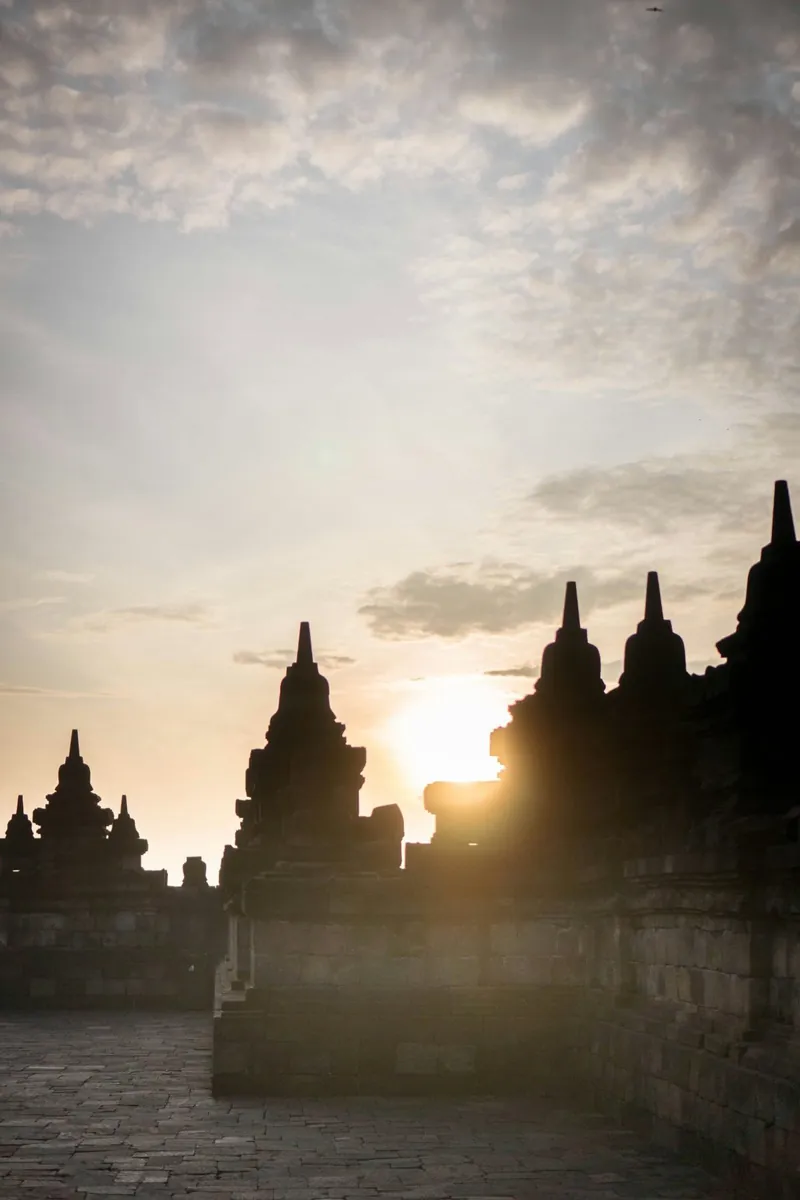
Regardless of month, the first two hours after temple opening (08:00–10:00 for daytime visitors, 04:30–06:30 for sunrise visitors) are quieter, cooler, and better lit than any other time. This matters more than the month.
Ramadan is a good time to visit, not a bad one
The myth is that Indonesia closes down for Ramadan. It does not. Borobudur operates normally, sessions run on schedule, and the temple is noticeably quieter because fewer domestic tourists visit during the fast. Local restaurants may operate reduced hours during the day but resume normally after sundown. Be respectful (do not eat or drink in front of people fasting) and you will have a great trip.
Sunrise visibility is a coin flip in the wet season
Even in the wet season, roughly half of mornings are clear enough to see the valley. Booking sunrise in December is not a waste — you will get the "before-everyone-else" atmosphere regardless of weather, and you have a 50% shot at the full photograph.
Hotel rates halve off-season
A room at Amanjiwo that is €1,400 in July is €700 in February. Hotel Le Temple drops from €220 to €140. If you are chasing a luxury stay near Borobudur, the wet season is when it becomes affordable.