 Ohne Anstehen buchbar
 Borobudur vs. Prambanan
Welchen sollten Sie besuchen?
Wenn Sie Zeit für beide haben, besuchen Sie beide – sie liegen 90 Minuten voneinander entfernt, sind beide UNESCO-Weltkulturerbestätten, und der Kontrast ist ein wesentlicher Reiz (Borobudur ist buddhistisch, Prambanan hinduistisch). Wenn Sie sich nur für einen entscheiden können, wählen Sie für die meisten Besucher Borobudur: weltweit bekannter, emotional berührender und das Sonnenaufgangserlebnis ist einzigartig in der Region. Wählen Sie Prambanan, wenn Sie sich für hinduistische Architektur, die Ramayana-Reliefs oder die Open-Air-Ballettaufführungen im Trimurti-Theater an bestimmten Abenden interessieren. Beide an einem Tag mit einem privaten Fahrer ab Yogyakarta zu besuchen, dauert etwa 10 Stunden und ist der einfachste Weg, sie gemeinsam zu erleben.
Kurze Antwort
Wenn Sie Zeit für beide haben, besuchen Sie beide. Sie liegen 90 Autominuten voneinander entfernt, sind beide UNESCO-Weltkulturerbestätten, und der Kontrast zwischen ihnen ist ein wesentlicher Reiz – Borobudur ist buddhistisch, Prambanan hinduistisch, und der Besuch beider auf einer Reise erzählt eine weitaus vollständigere Geschichte über Zentraljava im 9. Jahrhundert als jeder für sich allein. Wenn Sie sich nur für einen entscheiden können: Für die meisten Besucher ist Borobudur die Wahl. Er ist der weltweit bekanntere der beiden, emotional berührender, und das Sonnenaufgangserlebnis ist in der Region einzigartig. Wählen Sie Prambanan, wenn Sie sich speziell für hinduistische Architektur oder das Ramayana-Epos interessieren oder das Ramayana-Ballett sehen möchten (das jeden Abend in Prambanan aufgeführt wird).
Der Fall für Borobudur
Borobudur ist das größte buddhistische Monument der Welt und wohl das visuell kohärenteste antike Bauwerk Südostasiens. Es ist als ein einziges Mandala errichtet – eine dreidimensionale Karte des buddhistischen Kosmos – mit fünf quadratischen Terrassen, die mit dem Leben Buddhas verziert sind, drei kreisförmigen Terrassen, die von 72 gitterartigen Stupas gekrönt werden, in denen verborgene Buddha-Statuen sitzen, und einem einzigen Hauptstupa an der Spitze. Man steigt durch die Ebenen empor, genau wie ein Pilger des 9. Jahrhunderts, und begegnet den Reliefs in der beabsichtigten erzählerischen Reihenfolge.
Was Borobudur auszeichnet: das Sonnenaufgangserlebnis. Borobudur ist einer der wenigen großen Tempel der Welt, den man bei Tagesanbruch betreten kann, noch vor der öffentlichen Öffnung, mit weniger als 100 anderen Menschen. Es gibt kein vergleichbares Erlebnis in Prambanan. Die 2.672 Relieftafeln – die erzählenden Tafeln, die in die quadratischen Terrassen gemeißelt sind, schildern das gesamte Leben Buddhas in rund 1.300 Szenen, plus eine zweite Ebene mit moralischen Gleichnissen (das Karmawibhangga, das größtenteils im Sockel verborgen ist) und die Reise eines Pilgers namens Sudhana durch das Gandavyuha-Sutra. Es ist das umfassendste buddhistische Erzählkunstwerk, das je geschaffen wurde.
Die emotionale Stimmung. Borobudur wirkt kontemplativ. Die Terrassen winden sich nach innen und oben, man steigt schweigend mit einem Führer auf, und die Wirkung gleicht eher einer Meditation als einer Besichtigung. Die Umgebung: ländliches Zentraljava, Reisfelder ringsum, zwei Vulkane (Merapi und Merbabu) sind an klaren Tagen von den oberen Terrassen aus sichtbar. Prambanan liegt nahe einer Autobahn; Borobudur liegt in der Landschaft. Gegen Borobudur spricht, dass es weiter von Yogyakarta entfernt ist (90 Minuten gegenüber 30), was bei knapper Zeit eine Rolle spielt. Es ist auch strenger reguliert – das Besucherlenkungssystem bedeutet, dass man mit einem lizenzierten Führer und einer festen Gruppe aufsteigt, während man in Prambanan freier erkunden kann.
Der Fall für Prambanan
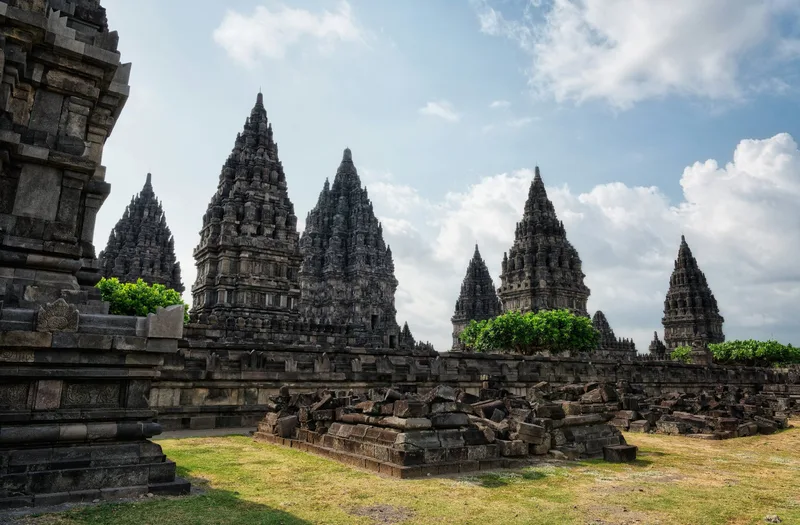
Prambanan ist der größte hinduistische Tempelkomplex in Indonesien und visuell anders als alles andere in der Region. Statt Borobudurs einzigem Mandala ist Prambanan eine Anlage mit über 240 einzelnen Tempeln (Candi), dominiert von drei aufragenden 47 Meter hohen Türmen, die Shiva, Vishnu und Brahma gewidmet sind – der hinduistischen Trimurti. Der höchste ist der Shiva-Tempel in der Mitte; in seinen Innenwänden befinden sich die ältesten erhaltenen Steinreliefs des gesamten Ramayana-Epos.
Was Prambanan zu einer eigenen Reise wert macht: die Vertikalität. Borobudur ist ein Aufstieg über eine breite, flache, gestufte Pyramide. Prambanan sind Türme – schmal, spitz, aufragend in einer Weise, die eher an europäische gotische Kathedralen erinnert als an buddhistische Mandalas. Die architektonische Sprache ist völlig anders. Die Ramayana-Reliefs – im Shiva-Tempel gehören die Reliefs des Ramayana aus dem 9. Jahrhundert zu den ältesten erhaltenen Darstellungen des Epos überhaupt. Sie zu lesen, ist eine direkte Verbindung zu einer der grundlegenden Geschichten der Menschheit.
Das Ramayana-Ballett. An drei Abenden pro Woche (Dienstag, Donnerstag, Samstag) führen 200 Tänzer und ein volles Gamelan-Orchester das Ramayana auf einer Freiluftbühne mit den beleuchteten Prambanan-Türmen als Kulisse auf. Es ist eine der spektakulärsten kulturellen Darbietungen Indonesiens. Borobudur hat nichts Vergleichbares. Leichte Erreichbarkeit: Prambanan ist 30 Minuten mit dem Auto von Yogyakarta und 20 Minuten vom Flughafen entfernt. Wenn Sie wenig Zeit haben, ist Prambanan der einfachere Besuch.
Die äußeren Tempel. Die meisten Besucher sehen nur das Haupt-Trimurti-Gelände, aber der archäologische Park von Prambanan enthält mehrere andere bedeutende Tempel – Sewu, Lumbung und Bubrah – die mit einem kostenlosen Shuttle vom Haupteingang erreichbar sind. Diese ergeben einen viel reichhaltigeren Besuch, als die meisten Reiseführer zugeben. Gegen Prambanan für sich allein spricht, dass das Erlebnis konventioneller ist – man läuft bei Tageslicht mit einem Reiseführer durch eine Anlage, anstatt im Morgengrauen durch ein Mandala aufzusteigen. Es ist spektakulär, aber nicht so einzigartig wie Borobudur.
Der religiöse Kontext – warum dies wichtig ist
Borobudur und Prambanan wurden innerhalb von fünfzig Jahren in derselben Region Zentraljavas von verschiedenen Dynastien erbaut und repräsentieren die beiden großen religiösen Traditionen, die im Java des 9. Jahrhunderts nebeneinander existierten. Borobudur ist ein buddhistisches Monument der Sailendra-Dynastie; Prambanan ist ein hinduistischer Tempelkomplex der Sanjaya-Dynastie.
Beide zusammen zu besuchen, gibt Ihnen die ganze Geschichte: wie buddhistische und hinduistische Architektur und Weltanschauung im mittelalterlichen Java nebeneinander aussahen, wie die beiden Traditionen voneinander borgten und sich voneinander abhoben, und wie Indonesien danach zum größten muslimischen Land der Welt wurde, während es dieses nicht-muslimische Erbe als nationale Schätze bewahrte. Man kann das Zentraljava des 9. Jahrhunderts von keinem der beiden Tempel allein wirklich verstehen. Die praktische Konsequenz: Behandeln Sie dies nicht als einfachen „Welcher ist besser“-Vergleich. Sie ergänzen sich, sie konkurrieren nicht.
Beides an einem Tag – wie plant man eine perfekte Kombination?
Der sauberste Weg, beide Tempel an einem Tag zu besuchen, ist die Buchung eines privaten Fahrers ab Yogyakarta mit Stopps an beiden Stätten – rechnen Sie mit rund 10 Stunden Tür-zu-Tür. Ein sinnvoller Ablauf: Abfahrt in Yogyakarta gegen 07:30 Uhr, Ankunft in Prambanan um 08:30 Uhr für das kühlere Morgenlicht auf den Türmen und Reliefs, Mittagessen in Yogyakarta gegen 12:00 Uhr, dann Weiterfahrt nach Borobudur für einen Nachmittagsaufstieg und die goldene Abendstunde auf den oberen Terrassen. Die Rückkehr nach Yogyakarta bringt Sie gegen 18:00 Uhr zurück ins Hotel. Ein privater Fahrer für den ganzen Tag kostet in der Regel 40–60 €, je nach Fahrzeuggröße – Sie buchen direkt über Ihr Hotel in Yogyakarta, die Touristeninformation am Flughafen oder einen ortsansässigen Fahrer. Die meisten Hotels haben eine Liste vertrauenswürdiger Fahrer, der Preis wird pro Tag und nicht pro Kilometer festgelegt.
Der Vorteil, beides an einem Tag statt auf zwei Tage verteilt zu erledigen: eine Transportbuchung, ein Fahrer, ein voller, aber stimmiger Tag. Zwei Hin- und Rücktransfers ab Yogyakarta kosten mehr als ein kombinierter Tag, und Sie vermeiden die zweite Tageshotelei. Der Nachteil: Es ist ein langer Tag. Borobudur bedeutet einen echten Aufstieg (insgesamt 1.460 Stufen bis zu den oberen Terrassen), und Prambanan erfordert weitere 30–45 Minuten Gehen auf unebenem Stein. Wenn jemand in Ihrer Gruppe über 70 ist oder sich langsam bewegt, ist die Aufteilung auf zwei Tage die sanftere Option – Borobudur am ersten Tag mit einem Sonnenaufgangserlebnis und einem Nachmittag im Hotel, Prambanan am zweiten Tag am späten Nachmittag, wenn die Türme das westliche Licht einfangen.
Wenn Sie nur einen Tag haben – welchen wählen Sie?
Wenn die Umstände eine Wahl erzwingen: Entscheiden Sie sich für Borobudur, wenn – dies Ihr erster Besuch in Indonesien ist, Sie das einzigartige Sonnenaufgangs- oder Sonnenuntergangserlebnis wünschen, Sie sich für Buddhismus oder Meditation interessieren, Sie die Bucket-List-Anerkennung des größten buddhistischen Monuments der Welt suchen oder Sie ein Fotograf sind, der von atmosphärischen Aufnahmen angezogen wird.
Entscheiden Sie sich für Prambanan, wenn – Sie sich speziell für hinduistische Architektur oder das Ramayana-Epos interessieren, Sie sehr wenig Zeit haben (Prambanan liegt näher an Yogyakarta und benötigt weniger Zeit für einen guten Besuch), oder Sie eine größere Reise durch hinduistische Stätten in Asien unternehmen und das indonesische Beispiel sehen möchten. Wählen Sie die Kombi-Tour, wenn dies der einzige Tag ist, den Sie in Yogyakarta haben, und Sie beide Sehenswürdigkeiten ohne den logistischen Aufwand sehen möchten.
Dinge, die Ihnen niemand sagt
Borobudur ist größer, als es auf Fotos aussieht. Der 3D-Maßstab von Borobudur – 118 Meter breit an der Basis, 35 Meter hoch bis zur zentralen Stupa – kommt auf den meisten Fotos nicht zur Geltung. Ein Rundgang um die Basis dauert 10 Minuten. Der Aufstieg durch alle neun Terrassen erfordert 45 Minuten gleichmäßiges Gehen. Planen Sie mehr Zeit ein, als die Fotos vermuten lassen.
Prambanan ist größer, als es auf der Karte aussieht. Die meisten Besucher planen 1–2 Stunden für Prambanan ein, basierend auf der Größe der Haupt-Trimurti auf der Karte, und entdecken dann, dass der umliegende Komplex weitere 200+ kleinere Tempel, abgelegene Candi (erreichbar mit einem kostenlosen Shuttle) und ein großes archäologisches Museum umfasst. Nehmen Sie sich 2–3 Stunden, um ihm gerecht zu werden.
Der 90-minütige Transfer zwischen den beiden kann weitere Stopps beinhalten. Die Fahrt von Borobudur nach Prambanan führt durch die Außenbezirke von Yogyakarta. Wenn Sie beides an einem Tag mit einem privaten Fahrer machen, fragen Sie nach einem zusätzlichen Stopp am Kraton (dem Palast des Sultans von Yogyakarta), Taman Sari (der ehemaligen Wasserburg) oder einer lokalen Batik-Werkstatt – jeder dieser Stopps kann ohne großen Zeitverlust in die Tagesmitte eingefügt werden.
Das Ramayana-Ballett ist eine kulturelle Aufführung, die drei Abende pro Woche auf der Open-Air-Bühne Trimurti stattfindet. 200 Tänzer, ein volles Gamelan-Orchester, zwei Stunden, die beleuchteten Prambanan-Türme als Kulisse und das 2.000 Jahre alte Ramayana-Epos, das ausschließlich durch Tanz und Musik erzählt wird. Es läuft drei Abende pro Woche, und fast niemand, der es sieht, bereut es. Wenn Sie an einem Dienstag, Donnerstag oder Samstag in Yogyakarta sind, buchen Sie das Ballett.
Borobudur fühlt sich heilig an; Prambanan fühlt sich königlich an. Eine subjektive Beobachtung, aber viele Besucher berichten unabhängig voneinander davon. Borobudur hat den emotionalen Ton einer Meditationsretreat – ruhig, nach innen gerichtet, kumulativ. Prambanan hat den Ton eines königlichen Hofes – imposant, nach außen gerichtet, beeindruckend. Beide sind außergewöhnlich, aber sie wirken auf unterschiedliche Weise auf einen.