 Coupe-file disponible
 Deux jours à Yogyakarta : Borobudur, Prambanan et Ratu Boko
Un matin bouddhiste, un matin hindou et un palais perché au crépuscule — comment enchaîner les trois grands sites sans passer le voyage en voiture.
Yogyakarta se trouve entre deux des plus grands monuments d'Asie du Sud-Est, édifiés à un siècle d'intervalle par des dynasties rivales, à quarante kilomètres l'un de l'autre avec la ville entre eux. La plupart des visiteurs consacrent une seule journée frénétique à ce duo, et beaucoup en reviennent avec un souvenir flou. Deux jours, voilà le rythme qui fonctionne : un pour Borobudur et ses temples satellites dans l'ouest bouddhiste, un pour Prambanan et le palais de Ratu Boko dans l'est hindou, en exploitant la lumière aux deux extrémités de la journée et en prenant le temps de s'asseoir pour déjeuner. Cet itinéraire dessine cette structure, les distances et les trajets qui la tiennent ensemble, ainsi que les variantes à envisager pour le lever du soleil, la saison des pluies et les voyageurs qui ne disposent vraiment que d'une journée.
Pourquoi deux jours et pas un
L’obstacle est géographique, non physique. Borobudur se dresse à environ quarante kilomètres au nord-ouest du centre de Yogyakarta, dans la plaine de Kedu, et Prambanan se trouve à l’est sur la route de Solo ; entre les deux sites, comptez environ quatre-vingt-dix minutes de trajet. Les compresser en une seule journée signifie trois heures de voiture, deux entrées à horaire réservé enchaînées de justesse, et le second monument visité à la pire heure possible, avec une attention déjà épuisée.
Réparti sur deux jours, le même trajet devient deux allers-retours confortables, chaque site bénéficie de la fraîcheur du matin ou du soir, et vous gagnez ce que les visiteurs d'un jour sacrifient toujours : les monuments plus modestes. Mendut et Pawon du côté de Borobudur, Ratu Boko du côté de Prambanan. Ce ne sont pas des ajouts anecdotiques. C'est ce qui transforme deux édifices célèbres en une vision cohérente du Java central aux VIIIe et IXe siècles.
Deux jours offrent aussi une marge face aux caprices de la météo. Si la saison des pluies apporte un orage en fin de journée le premier jour, il vous reste le deuxième, et l'itinéraire ci-dessous peut être inversé sans rien casser. Un plan sur une journée n'a pas cette souplesse, c'est pourquoi la version condensée en fin de guide est celle que nous recommandons le moins.
Jour un : Borobudur, Mendut et Pawon
Partez tôt et dirigez-vous vers l’ouest. La journée d’exploitation de Borobudur s’étend de 08:00 à 16:00, avec des sessions de quatre-vingt-dix minutes à horaire réservé sur la structure entre 08:30 et 15:30 ; une session matinale vous permet donc d’accéder aux terrasses avant que la pierre n’ait absorbé la chaleur du jour. Que vous choisissiez le premier créneau ou une session à l’heure dorée dès 04:30, le principe reste le même : le monument récompense le visiteur matinal et punit celui de midi.
Après l'ascension, ne repartez pas. Le billet d'entrée au site inclut le musée Karmawibhangga, qui présente la documentation des panneaux de bas-reliefs ensevelis, scellés dans le pied du monument, ainsi que le musée Samudraraksa, construit autour des navires sculptés dans ses murs et des routes maritimes qui ont porté le bouddhisme jusqu'à Java. Une heure dans chacun, avec la promenade autour de la base entre les deux, fait toute la différence entre avoir gravi Borobudur et l'avoir compris.
Puis prenez l'axe vers l'est. Le bien classé au patrimoine mondial comprend trois monuments, pas un : Borobudur, plus Mendut et Pawon, alignés sur une ligne droite à l'est, à lire ensemble comme les étapes vers l'atteinte du nirvana. Mendut abrite un Bouddha assis monumental flanqué de deux bodhisattvas et constitue, pour de nombreux visiteurs, la sculpture la plus émouvante du voyage. Pawon, plus petit encore, se tient entre les deux. Tous deux sont à quelques minutes du site principal et ne demandent pas beaucoup de temps.
Visez à être de retour à Yogyakarta ou installé dans le village de Borobudur en fin d'après-midi. Le jour un est le plus long des deux, et il n'y a aucun intérêt à le prolonger — les sites de l'est sont l'affaire du lendemain et ils veulent des jambes fraîches.
Jour deux, matin : Prambanan
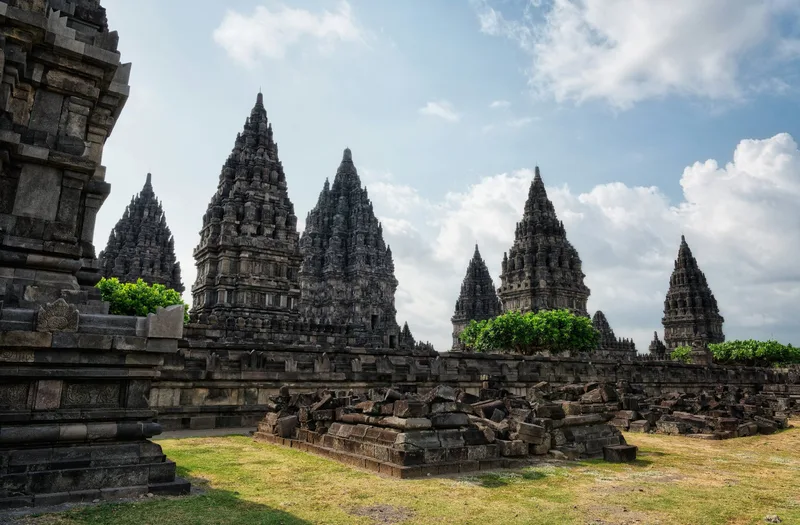
Prambanan est le plus vaste et le plus magnifique complexe de temples hindous d'Indonésie, élevé au milieu du IXe siècle — traditionnellement associé au roi Balitung Maha Sambu de la dynastie Sanjaya, bien que la date exacte et le bâtisseur restent incertains — en offrande à la Trimurti de Shiva, Vishnou et Brahma. Ses trois temples principaux se dressent dans la cour intérieure, un pour chacun, et l'effet ne pourrait être plus différent de Borobudur : là où le monument bouddhiste est un vaste mandala unique que l'on parcourt à pied, Prambanan est une forêt de flèches hautes et élancées entre lesquelles on déambule.
Ce contraste est précisément la raison de les voir à deux jours d'intervalle plutôt qu'à des mois de distance. Deux dynasties, deux fois, une même plaine, à environ un siècle d'écart — et, à en juger par les édifices, aucune grande animosité entre elles. Se tenir dans la cour intérieure au lendemain matin de l'ascension de Borobudur compte parmi les intervalles de douze heures les plus instructifs qu'un voyageur puisse vivre en Asie.
Revenez-y le matin, encore. Les cours de Prambanan sont ouvertes et sans ombre, le site accueille plus de deux millions de visiteurs par an, et les cars touristiques s'épaississent dès la mi-matinée. Prévoyez deux à trois heures, puis faites une pause déjeuner et un repos avant l'étape de l'après-midi — Ratu Boko est proche, et l'intérêt de l'après-midi réside dans la lumière, non dans le kilométrage.
Une option supplémentaire, si votre jour deux a de la marge et que vos jambes ont survécu : Prambanan accueille le Ramayana Ballet, représenté dans les jardins tout au long de l'année, aux côtés d'un calendrier complet de festivals et autres événements. La soirée se termine tard et cela éclipsera Ratu Boko de votre programme — considérez-le donc comme un choix exclusif plutôt qu'un ajout. Les voyageurs accompagnés d'adolescents optent généralement pour le ballet ; ceux venus pour l'architecture choisissent la colline et le coucher de soleil.
Jour deux, fin d'après-midi : Ratu Boko
Ratu Boko n'est pas un temple, et c'est exactement pour cela qu'il trouve sa place en fin de circuit. C'est un ancien complexe palatial, que l'on croit édifié au VIIIe siècle durant la période du Mataram ancien, perché sur une colline à quelques minutes de route au sud de Prambanan. Après deux jours d'architecture sacrée, il offre quelque chose de radicalement différent : un site résidentiel et cérémoniel, au caractère profane, déployé sur un escarpement dominant la plaine en contrebas.
Le complexe se visite idéalement à pas lents. La porte emblématique de l'entrée s'élève en deux assises de pierre et encadre l'approche ; au-delà se trouvent une grande salle et le paseban où se tenaient réunions et cérémonies, des quartiers et des bassins de baignade réservés à l'usage privé, ainsi que deux petites grottes que l'on pense avoir servi de lieux de méditation. Rien ici n'est aussi haut que Prambanan ni aussi vaste que Borobudur, et rien n'a besoin de l'être.
Ce qui fait la renommée de Ratu Boko, c'est le coucher de soleil. Le site regarde vers l'ouest par-dessus la plaine, et par un soir dégagé, le soleil descend derrière la crête tandis que tout le bassin de Yogyakarta s'étale sous les terrasses — la plaine qui abrite les deux monuments où vous avez passé deux jours. C'est la conclusion naturelle du circuit, et elle vous prend environ quatre-vingt-dix minutes de votre soirée.
L'ossature pratique : chauffeurs, réservations et horaires
Louez une voiture avec chauffeur pour les deux jours et convenez à l’avance des conditions de l’aller-retour plutôt que d’un tarif horaire. Le VTC convient pour un trajet diurne aller simple, mais se raréfie fortement dans les sites ruraux et après la tombée de la nuit, ce qui le rend particulièrement peu adapté à un coucher de soleil à Ratu Boko. Donnez à votre chauffeur les horaires d’entrée confirmés plutôt que des horaires approximatifs — chaque site de ce circuit fonctionne avec une entrée à horaire réservé ou à capacité gérée, et un chauffeur qui travaille à la bonne heure vaut plus qu’une voiture plus rapide.
Réservez chaque site séparément et traitez chaque entrée comme un rendez-vous. Les sessions structurées de Borobudur sont limitées, incluent un guide et remettent les sandales Upanat à l'enregistrement ; Prambanan et Ratu Boko ont leurs propres dispositifs. Nous ne gérons que Borobudur — Prambanan est organisé comme un service dédié sur un site séparé si vous souhaitez y bénéficier du même traitement. Ce qui importe, c'est que tout soit confirmé avant votre arrivée, car ce ne sont pas des sites où se présenter sans réservation fonctionne en haute saison.
Yogyakarta est le camp de base évident pour ces deux journées, avec ses hôtels, sa gastronomie et ses liaisons aéroportuaires. La seule exception est un lever de soleil à Borobudur, où dormir dans le village de Borobudur élimine totalement un départ à 03h00 le premier jour. Si vous optez pour cette option, prévoyez de revenir en ville le soir du premier jour afin que les sites de l'est le deuxième jour soient à courte distance plutôt qu'à un long trajet.
Préparez-vous pour deux longues journées en plein air plutôt que pour deux visites de musées. Épaules et genoux couverts sur chaque site, tissus légers et respirants, chapeau, crème solaire et plus d'eau que vous ne le pensez — avec la réserve que la boisson n'est pas autorisée sur les terrasses de Borobudur, donc la bouteille reste avec votre sac pendant ces quatre-vingt-dix minutes. Une veste imperméable en saison des pluies vaut mieux qu'un parapluie sur la pierre à découvert. Des chaussures confortables comptent pour les jardins et les pentes de Ratu Boko ; sur le monument lui-même, vous porterez les sandales fournies, quoi qu'il en soit.
Variantes à envisager
La version lever de soleil : remplacez la session de jour du premier jour par un accès aux heures dorées dès 04h30, dormez dans le village de Borobudur la veille, et utilisez le milieu de journée libéré pour Mendut, Pawon et un long déjeuner. C'est la version la plus aboutie de l'itinéraire et celle que nous recommandons le plus souvent aux visiteurs qui ont la flexibilité de déplacer une nuit.
La version saison des pluies : gardez les deux matinées, traitez les après-midis comme optionnels, et ayez les musées de Borobudur et un café près de Prambanan comme solutions de repli en cas d'orage. La pluie dans le centre de Java a tendance à arriver sous forme de fortes averses en après-midi plutôt que d'un ciel gris persistant, donc un plan axé sur le matin perd très peu. Le coucher de soleil à Ratu Boko est le seul élément vraiment à la merci des nuages — si le deuxième jour s'annonce mauvais, déplacez-le à la fin du premier jour et tentez le coup deux fois.
La compression en une journée, si c'est vraiment tout ce que vous avez : Borobudur au lever de soleil ou lors de la première session, un long transfert, et Prambanan en fin d'après-midi quand la lumière s'adoucit et que les cars sont partis. Laissez tomber Ratu Boko, Mendut et Pawon. Ça fonctionne, des milliers de gens le font, et c'est bien mieux dans cet ordre que dans l'autre — mais vous passerez trois heures en voiture et vous verrez deux monuments au lieu de cinq.
Questions fréquentes
Puis-je voir Borobudur et Prambanan en une journée ?
Oui, et de nombreux visiteurs le font. Les deux sites sont à environ quarante kilomètres l'un de l'autre, avec à peu près quatre-vingt-dix minutes de route entre eux, donc une seule journée signifie environ trois heures en voiture. Commencez par Borobudur, dans la fraîcheur du matin, puis Prambanan en fin d'après-midi. Sur deux jours, vous obtenez les mêmes sites à de meilleures heures, plus Mendut, Pawon et Ratu Boko.
Dans quel ordre dois-je visiter les temples ?
Borobudur d'abord. C'est le départ le plus tôt, le trajet le plus long et le site le plus éprouvé par la chaleur de midi, et cela prépare le contraste qui rend Prambanan saisissant le lendemain matin. Ratu Boko vient en dernier, en fin d'après-midi, car tout son attrait réside dans la vue vers l'ouest sur la plaine au coucher du soleil — le visiter à midi, c'est le gâcher.
Ratu Boko vaut-il le détour supplémentaire ?
Si vous appréciez les deux autres, oui. C'est un complexe palatial du VIIIe siècle plutôt qu'un temple, perché sur une colline au sud de Prambanan, avec une porte à double niveau saisissante, une salle et un paseban, des bassins de baignade, et deux petites grottes que l'on pense avoir été utilisées pour la méditation. C'est plus calme que les grands monuments et cela boucle le circuit avec la plus belle vue de coucher de soleil sur la plaine.
Où dois-je m'installer pour ces deux jours ?
Yogyakarta, pour les hôtels, la gastronomie et les liaisons aériennes — les deux sites se prêtent parfaitement à des excursions d’une journée au départ de la ville. La seule exception qui vaille vraiment le détour est un lever de soleil à Borobudur, où passer la nuit précédente dans le village de Borobudur évite un départ à 03h00. Dans ce cas, revenez en ville le soir même afin que les sites à l’est, le deuxième jour, ne soient qu’à quelques minutes de route.
Dois-je réserver les trois sites à l’avance ?
Réservez à l’avance pour tout ce qui est à horaire réservé, et en haute saison, réservez à l’avance tout court. L’accès à la structure de Borobudur fonctionne avec un nombre limité de sessions de quatre-vingt-dix minutes entre 08:30 et 15:30, chacune avec un guide et des sandales remises, si bien que la session que vous souhaitez peut être complète plusieurs jours avant votre arrivée. Nous nous occupons de Borobudur ; Prambanan dispose de son propre service de concierge sur un site distinct.
Combien de temps de conduite cela représente-t-il sur les deux jours ?
Moins que ce que l’on redoute, si l’on organise bien les étapes. Le premier jour est un aller-retour vers Borobudur, environ une heure de route depuis le centre de Yogyakarta, plus quelques minutes pour Mendut et Pawon. Le deuxième jour est encore plus court : Prambanan se trouve à la limite est de la ville, et Ratu Boko est une courte montée depuis là. Garder le même chauffeur les deux jours simplifie l’ensemble.