 Acceso sin colas disponible
 Cómo llegar a Borobudur desde los aeropuertos de Yogyakarta
En qué aeropuerto aterrizas, qué resuelve y qué no la conexión ferroviaria, y cómo encajar el templo en tus vuelos.
Casi todas las preguntas que recibimos sobre la logística de Borobudur resultan ser, en el fondo, preguntas sobre el aeropuerto. El templo se alza en la llanura de Kedu, en la regencia de Magelang, a unos 40 kilómetros al noroeste del centro de Yogyakarta, y los dos aeropuertos que dan servicio a la región se encuentran en lados opuestos de la ciudad. Cuál de ellos use tu vuelo cambia el trayecto, el coste, la hora a la que tienes que despertarte y si una visita al templo el mismo día es siquiera realista. Esta guía recorre el lado de la llegada del viaje: qué es realmente el Aeropuerto Internacional de Yogyakarta, qué resuelve el enlace ferroviario del aeropuerto y qué no, cómo se comparan los conductores y los autobuses en esta ruta concreta, y cómo secuenciar una sesión en el templo alrededor de un vuelo sin ir justo de tiempo.
Dos aeropuertos, dos trayectos completamente distintos
El Aeropuerto Internacional de Yogyakarta (YIA) es la puerta de entrada de larga distancia de la región. Se encuentra en Palihan, en el distrito de Temon de la regencia de Kulon Progo, bastante al oeste de la ciudad a la que sirve — una decisión deliberada, ya que el antiguo aeropuerto no tenía espacio para crecer. Para un visitante cuyo destino es Borobudur y no Yogyakarta en sí, esta ubicación es, discretamente, una buena noticia: un conductor que se dirija al templo no tiene que cruzar el centro de la ciudad en absoluto. Calcula unos 50 kilómetros y aproximadamente una hora y media de puerta a puerta, más si aterrizas por la tarde y te encuentras con tráfico en los accesos a Magelang.
Adisutjipto (JOG), en el extremo oriental de Yogyakarta, es el aeropuerto más antiguo y el más cercano a la ciudad. Desde allí, el templo está a unos 30 kilómetros y aproximadamente 75 minutos en coche, pero la ruta atraviesa o rodea la propia ciudad, por lo que el tiempo es mucho más sensible a la hora del día. Si tu vuelo es un salto doméstico corto dentro de Java, comprueba qué aeropuerto utiliza — los dos no son intercambiables, y un traslado de hotel reservado para el equivocado te costará la mañana.
En ambos casos, el trayecto es más predecible de lo que sugiere la distancia. No es una carretera de montaña: las carreteras hacia Magelang son autopistas provinciales ordinarias de dos carriles, con mucho tráfico de camiones y motos, pero rara vez bloqueadas. Lo que varía es el último tramo a través del pueblo de Borobudur, donde el tráfico de visitantes se concentra a mediodía. El aparcamiento de coches se trasladó a una nueva zona al noroeste del complejo en 2025, así que ten en cuenta una breve caminata desde donde tu conductor pueda detenerse realmente.
El enlace ferroviario del aeropuerto — rápido, pero apunta hacia la ciudad
El YIA tiene su propia estación de tren, servida por el enlace ferroviario del aeropuerto que KAI Bandara opera entre el aeropuerto y la estación central de Yogyakarta vía Wates. Los andenes están en la propia terminal, no al final de un trayecto en lanzadera, algo que no era así en los primeros años del aeropuerto, y el trayecto hasta la ciudad tarda aproximadamente cuarenta minutos. Es cómodo, con aire acondicionado, inmune al tráfico rodado y, con diferencia, la forma más agradable de llegar a Yogyakarta tras un vuelo largo.
No hace nada en absoluto por Borobudur. No hay ferrocarril hasta el templo ni lo ha habido nunca; la línea corre hacia el este, hacia la ciudad, mientras que el templo se encuentra al noroeste de ella. Tomar el tren y luego organizar transporte adicional desde la ciudad significa añadir el trayecto completo de 40 kilómetros de vuelta hacia fuera, en dirección opuesta al aeropuerto que acabas de dejar. Para un visitante cuya primera parada es el templo, el tren es un desvío disfrazado de atajo.
Donde el enlace ferroviario ayuda de verdad es en el plan común de dos etapas: tren hasta Yogyakarta el día de llegada, dormir en la ciudad o en el pueblo de Borobudur, y salir hacia el templo a la mañana siguiente con una noche completa detrás. Casi todos los que reservamos con nosotros salen mejor servidos con esa forma de viaje que intentando ir directamente de la sala de equipajes al monumento.
Un coche privado desde la terminal — la opción por defecto, y por qué
Para las llegadas con una sesión en el templo ya reservada, un coche previamente organizado que te espere en la sala de llegadas sigue siendo la opción que recomendamos primero. La razón no es la comodidad — es el trayecto de vuelta. Borobudur es un sitio rural, y la oferta de conductores dispuestos a aceptar una tarifa de vuelta desde allí se reduce drásticamente una vez que la multitud de excursiones de un día se ha ido. Un coche que te espera elimina ese problema por completo, y el tiempo de espera normalmente está incluido en el acuerdo de ida y vuelta en lugar de medirse con taxímetro.
Los aspectos prácticos son sencillos. Acuerda una tarifa fija de ida y vuelta en rupias antes de salir, no por horas. Indica al conductor la hora exacta de tu sesión en lugar de una ventana de llegada vaga, para que ambos trabajéis con el mismo reloj. Pide que te deje en el punto de encuentro indicado en tu reserva y no en la puerta principal: los terrenos de Borobudur son extensos, y el punto de registro para una sesión en la estructura del templo no siempre está donde el conductor supone.
Si no has preacordado nada, cualquier recepción de hotel en Yogyakarta te organizará un conductor para la mañana siguiente, y los propios conductores suelen cotizar trabajo para el día siguiente. Es un plan B perfectamente válido. Lo que evitaríamos es llegar a YIA sin ningún plan y negociar en la terminal, que es donde se encuentran las tarifas menos favorables de todo el viaje.
Autobuses, lanzaderas y apps de transporte: la versión honesta
El transporte público entre los aeropuertos y Borobudur existe, pero solo como una cadena de tramos separados. Del aeropuerto llegas a la ciudad; de la ciudad llegas a la terminal de Jombor, en el borde norte; desde Jombor, una lanzadera o autobús de la ruta de Magelang te lleva a Borobudur; desde la parada, caminas o das un salto local corto hasta la puerta. Cada tramo es barato y cada uno funciona. Encadenados con equipaje tras un vuelo intercontinental, suman la mayor parte de una mañana.
Nuestra opinión es que la ruta en autobús es una opción realmente buena en un día de descanso y una mala elección en un día de llegada. Si te alojas en Yogyakarta varias noches y te apetece el trayecto, tómalo: la carretera de Magelang es pintoresca y los autobuses son frecuentes a lo largo del mediodía. Si acabas de llegar, con jet lag y con una sesión con horario reservado para esa tarde, el riesgo acumulado de cuatro enlaces no merece el ahorro.
Las apps de transporte funcionan en Yogyakarta y aceptan un viaje a Borobudur. El inconveniente es el mismo que hace que el coche privado valga su precio: la cobertura en el pueblo es escasa, y una solicitud de regreso puede quedar sin respuesta durante media hora o más. La cobertura temprano por la mañana es aún peor, lo que descarta el transporte por app para cualquiera que tenga reservada una sesión al amanecer. Trátalo como una herramienta de un solo sentido durante el día, no como un plan de ida y vuelta.
Cómo secuenciar una sesión en el templo alrededor de tus vuelos
El día operativo de Borobudur va de 08:00 a 16:00 WIB, con ocho sesiones de noventa minutos en la estructura del templo repartidas entre las 08:30 y las 15:30, y el monumento ahora abre todos los días de la semana, incluidos los lunes. El acceso al amanecer comienza antes, desde las 04:30, y el acceso al atardecer cae a última hora de la tarde. Esas ventanas fijas, no el tiempo de conducción, son a lo que deben ajustarse tus vuelos.
Calculando hacia atrás desde una sesión matutina: permite noventa minutos para el trayecto desde YIA, treinta minutos para el registro, la entrega de sandalias y llegar al punto de encuentro, y un margen adicional para la caminata desde la nueva zona de aparcamiento. Una sesión a las 10:00, por tanto, requiere que salgas del aeropuerto hacia las 07:30 — cómodo si dormiste cerca, poco realista si tu vuelo aterriza a las 06:00 y aún te quedan inmigración y equipaje por delante.
El día de salida es más fácil, pero pilla a la gente de otra manera. Una sesión a última hora de la mañana que termine al mediodía deja tiempo de sobra para llegar a cualquiera de los dos aeropuertos para un vuelo por la tarde, pero solo si el conductor está esperando. Si vuelas el mismo día, este es el argumento más fuerte a favor del coche de ida y vuelta: el templo no es un lugar donde quieras descubrir los límites del transporte rural por app con una tarjeta de embarque en el bolsillo.
Una nota más para los visitantes del amanecer: salir de Yogyakarta a las 03:00 para llegar a las 04:30 es totalmente factible, y miles lo hacen, pero pasar la noche en el pueblo de Borobudur elimina el despertar, el trayecto y la ansiedad por el clima de una sola vez. Si tu itinerario tiene cualquier flexibilidad, pasar la noche cerca del templo es el cambio que más mejora una visita al amanecer.
Añadir Prambanan el mismo día
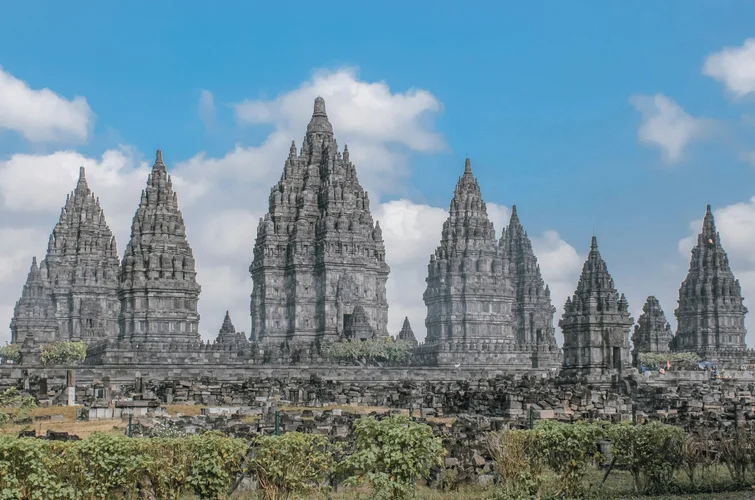
Los dos grandes monumentos de la región de Yogyakarta se encuentran a unos 40 kilómetros de distancia, aproximadamente noventa minutos en coche entre ellos, con la ciudad más o menos en el medio. Prambanan —el mayor complejo de templos hindúes de Indonesia, erigido a mediados del siglo IX como ofrenda a la Trimurti de Shiva, Vishnú y Brahma— está cerca del aeropuerto de Adisutjipto y en la carretera de Solo, mientras que Borobudur se halla en el lado opuesto. Visitar ambos en un día es habitual y perfectamente razonable; hacerlo mal también es habitual.
La fórmula que funciona es Borobudur primero, en el frescor de la mañana, luego un traslado al mediodía y Prambanan al final de la tarde, cuando la luz se suaviza y los autobuses de excursiones de un día han menguado. Si lo inviertes, llegarás a Borobudur con el calor y una cola de autocares por delante. Si vuelas desde Adisutjipto esa misma noche, el orden Borobudur-primero-Prambanan-después también te deja en el lado correcto de la ciudad.
Reserva la entrada de cada sitio por separado y trátalos como dos citas en lugar de una sola salida, porque cada uno tiene sus propias condiciones de admisión y su propio horario. Nosotros gestionamos solo Borobudur; Prambanan se opera como un servicio aparte en su propio sitio si deseas el mismo trato allí. Lo que podemos decir por experiencia es que el día es mucho más agradable cuando ambas entradas están confirmadas con antelación y el conductor sabe las dos horas fijas con las que trabaja.
Preguntas frecuentes
¿Hay un tren o autobús directo desde el Aeropuerto Internacional de Yogyakarta hasta Borobudur?
No. El enlace ferroviario del aeropuerto va hacia el este, a la estación central de Yogyakarta, no hacia el templo, y no hay ninguna línea de tren a Borobudur. El transporte público es posible, pero implica varios transbordos: del aeropuerto a la ciudad, de la ciudad a la terminal de Jombor y luego un servicio de la ruta de Magelang hasta el pueblo de Borobudur. La mayoría de los visitantes que llegan con equipaje toman un coche directamente desde la terminal.
¿Cuánto tarda el trayecto en coche desde YIA hasta Borobudur?
Aproximadamente una hora y media para el viaje de unos 50 kilómetros, suponiendo un traslado directo que evite el centro de la ciudad. Desde Adisutjipto (JOG), en el lado este de Yogyakarta, se acerca a los 75 minutos en unos 30 kilómetros, aunque esa ruta está más expuesta al tráfico urbano. Añade tiempo a mediodía, cuando el tráfico de visitantes se concentra en la aproximación final a través del pueblo de Borobudur.
¿Puedo visitar Borobudur el mismo día que aterrizo?
Sí, si las cuentas cuadran. Las sesiones de acceso al templo se organizan en bloques de noventa minutos entre las 08:30 y las 15:30, así que necesitas aterrizar con tiempo suficiente para salir del aeropuerto, conducir hasta allí y registrarte antes de que comience tu sesión elegida. Una llegada por la mañana hace cómoda una sesión por la tarde. Una llegada por la tarde no lo hace, y preferimos trasladar tu sesión al día siguiente antes de que tengas que ir a toda prisa.
¿Debo mantener al mismo conductor durante todo el día?
Para una llegada o salida del aeropuerto, sí. Borobudur es un sitio rural y la cobertura de servicios de transporte bajo demanda allí no es fiable, especialmente a primera hora de la mañana y después de que la multitud de excursiones de un día se disperse. Un acuerdo de ida y vuelta con tiempo de espera incluido cuesta más que una tarifa de un solo trayecto y elimina la única parte realmente impredecible del día. Acuerda una cifra fija en rupias antes de partir, en lugar de una tarifa por hora.
¿Dónde debería alojarme si quiero ver el amanecer en el templo?
En el propio pueblo de Borobudur, si tu itinerario lo permite. El acceso al amanecer comienza a las 04:30, lo que significa salir de Yogyakarta alrededor de las 03:00 y llegar ya cansado. Alojarse a pocos minutos de la puerta elimina el trayecto, el despertador y la mayor parte del estrés. Si debes quedarte en la ciudad, organiza el coche la noche anterior y confirma la hora de recogida directamente con el conductor, no a través de un intermediario.